 TH
TH


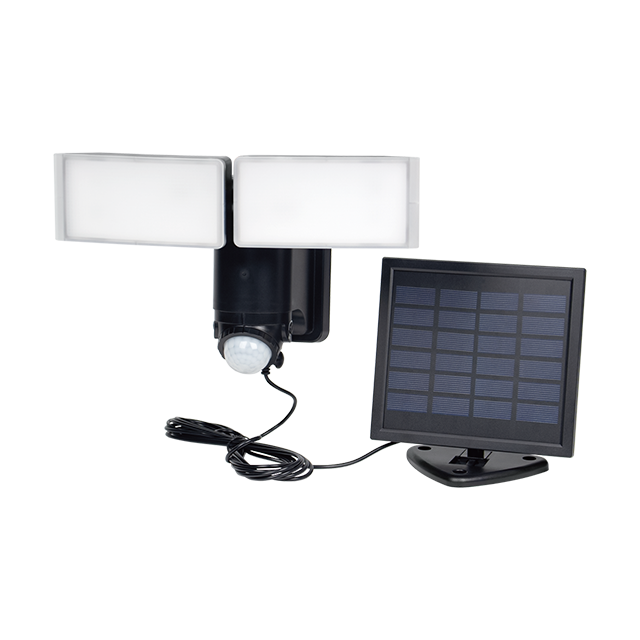
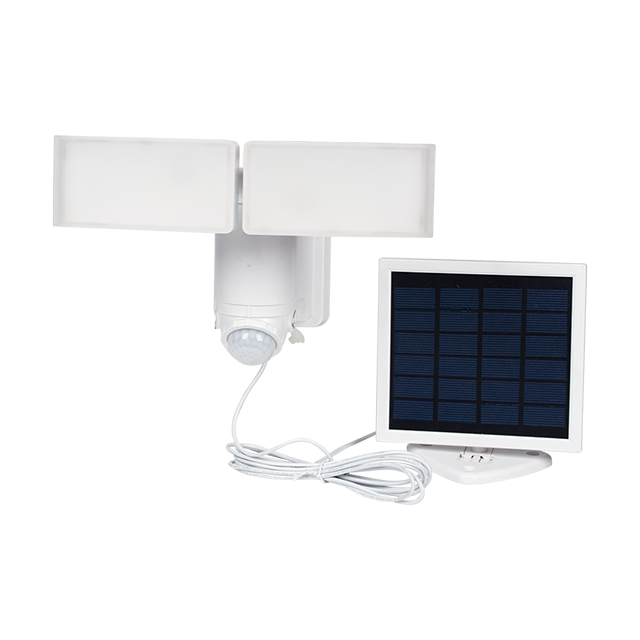
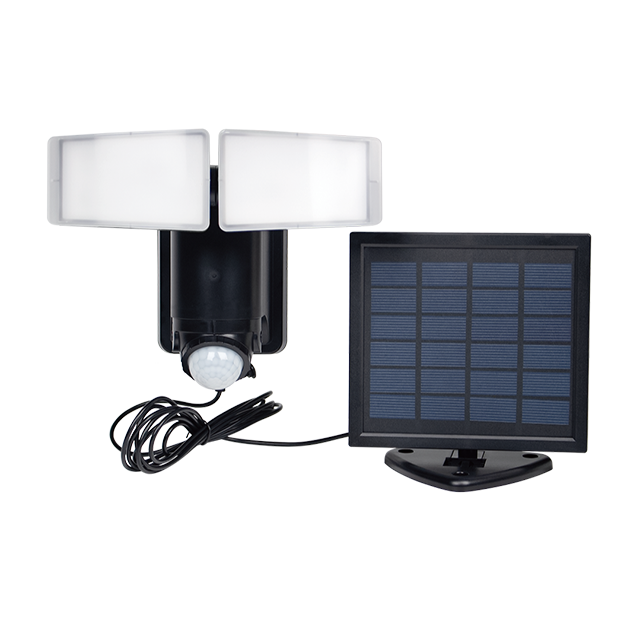
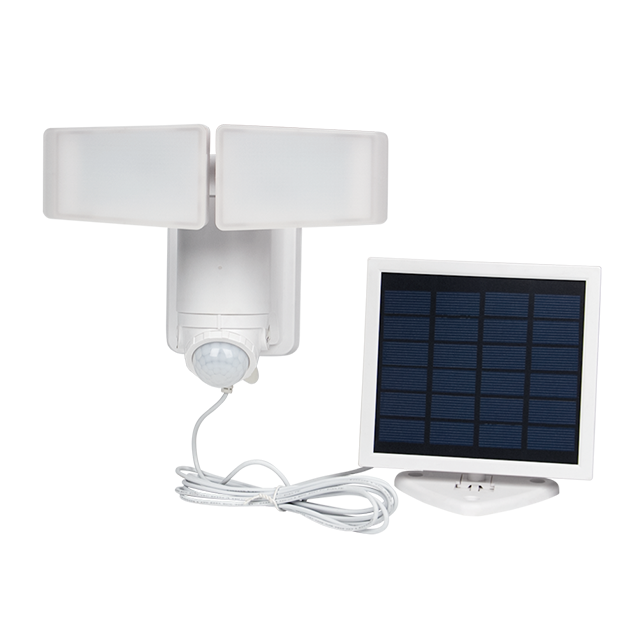
โคมไฟติดผนังพลังงานแสงอาทิตย์


Solar street lights are independent photovoltaic power generation and lighting systems. The core logic lies in "photoelectric conversion" and "energy storage"—capturing energy during the day through physical effects and releasing it at night via intelligent sensors.
| Parameter Category | Low-end / Simple Configuration | Mid-to-High-end / Professional Configuration | Impact on Performance |
|---|---|---|---|
| Solar Panel Type | Polycrystalline Silicon | Monocrystalline Silicon | Monocrystalline has higher conversion efficiency (approx. 21% ), performing better in weak light. |
| Battery Type | Ternary Lithium or Lead-acid | Lithium Iron Phosphate (LiFePO4) | LiFePO4 has a cycle life of over 2,000 times and is safer at high temperatures. |
| Luminous Efficacy | 100 - 130 lm/W | 170 - 210 lm/W | At the same power, higher efficacy makes solar street lights brighter and more energy-efficient. |
| Sensing Mode | Light Control Only (Full bright at dark) | Light Control Radar/Microwave Sensor | Radar sensing allows "full bright when people come, dim when they leave," significantly extending battery life. |
| Protection Rating | IP65 | IP66 / IP67 | Higher ratings mean stronger dust/water resistance and better weather durability for solar street lights . |
To evaluate whether solar street lights are worth it, one must look beyond the initial price tag and consider the Life Cycle Cost (LCC) . Although the hardware cost is often higher than traditional lights, the savings during installation and operation are significant.
Based on 2026 technology and energy prices, the return on investment for solar street lights typically follows this curve:
| Expense Item | Traditional AC Grid Light | Solar Street Lights | Economic Advantage Analysis |
|---|---|---|---|
| Initial Procurement | Approx. 1,500 - 2,500 CNY | 2,500 - 4,500 CNY | Solar hardware is more expensive (includes panels, batteries). |
| Installation Cost | 5,000 - 10,000 CNY (Inc. trenching/wiring) | 500 - 1,500 CNY (Pole only) | Solar street lights have a massive installation advantage. |
| Annual Electricity | Approx. 400 - 700 CNY/year | 0 CNY | Zero long-term operating costs. |
| Maintenance Frequency | Higher (Buried lines, ballasts) | Very Low (Panel cleaning only) | Simpler structure with fewer failure points. |
| 10-Year Total Cost | Approx. 10,500 - 19,500 CNY | Approx. 4,000 - 7,000 CNY | Total savings of over 60%. |
The value of solar street lights is reflected not only in cost savings but also in their extreme environmental adaptability. Since they do not rely on a public power grid, they can be placed anywhere the sun reaches.
| Environment | Example Region | Charging Efficiency | Technical Requirement | Solar Street Light Expectation |
|---|---|---|---|---|
| High Sun Zone | Deserts, NW Regions | Very High (5-7h/day) | UV resistance, Heat dissipation | Peak performance, no dark nights, long life. |
| Rainy/Humid Zone | SE Coast, Tropical | Medium (3-4h/day) | IP67 Rating , Monocrystalline | Requires "Rainy Mode" to ensure multi-day autonomy. |
| Frigid/High Latitude | NE Regions, N. Europe | Lower (2-3h/day) | Low-temp Compensation , Large Battery | Larger panels needed to maximize storage in short days. |
While solar street lights are called "maintenance-free" systems, they still require occasional checks. Understanding core consumable parts is vital for a lifespan exceeding 10 years.
The weakest link in solar street lights is usually the battery, not the solar panel. The cycle life determines the maintenance interval.
| Component | Expected Life (Years) | Failure Signs | Maintenance Suggestion |
|---|---|---|---|
| Solar Panel (PV) | 20 - 25 | Annual decay (approx. 0.5%) | Wipe surface dust every 6-12 months. |
| LiFePO4 Battery | 5 - 10 | Shorter lighting time | Replace the battery pack after cycle limit. |
| LED Light Source | 10 - 15 | Dimming, partial bead failure | Choose aluminum heads with good cooling. |
| Controller | 5 - 8 | Charging anomalies | Check seals to prevent condensation shorts. |
| Pole and Brackets | 15 - 20 | Surface rust, loose screws | Use hot-dip galvanized spray for corrosion. |
A: Yes. High-quality solar street lights are designed with "Autonomy Days." Even in extreme weather with no sun, they can maintain normal lighting for 3-5 days using battery reserves. Intelligent controllers can extend this to over 7 days by dimming brightness.
A: This is usually due to configuration mismatch rather than the technology. Traditional lights have an efficiency of 60-80 lm/W, while modern solar street lights use LEDs reaching 170-210 lm/W . If they seem dim, it is likely due to the panel being shaded or the system being set to a lower discharge power to save energy.
A: For most applications, no. Solar street lights typically use 12V or 24V low-voltage DC systems, which pose no risk of electric shock. They are "plug-and-play" systems; you only need to mount the components on the pole and connect the waterproof terminals.
A: It depends on the type. Lithium Iron Phosphate (LiFePO4) batteries have a cycle life of 2,000 - 3,000 times , with a replacement cycle of 8 - 10 years . Although the initial cost is higher, the amortized annual cost is the lowest among all battery types.
A: Most areas are suitable as long as there is an average of 3-4 hours of effective sunlight per day without obstruction. In colder or high-latitude regions, simply select configurations with larger panels and low-temperature compensation technology.
Copyright © Ningbo Loyal Lighting Technology Co., Ltd. All Rights Reserved.
